Game #1: Tournoi de Toulon 2023
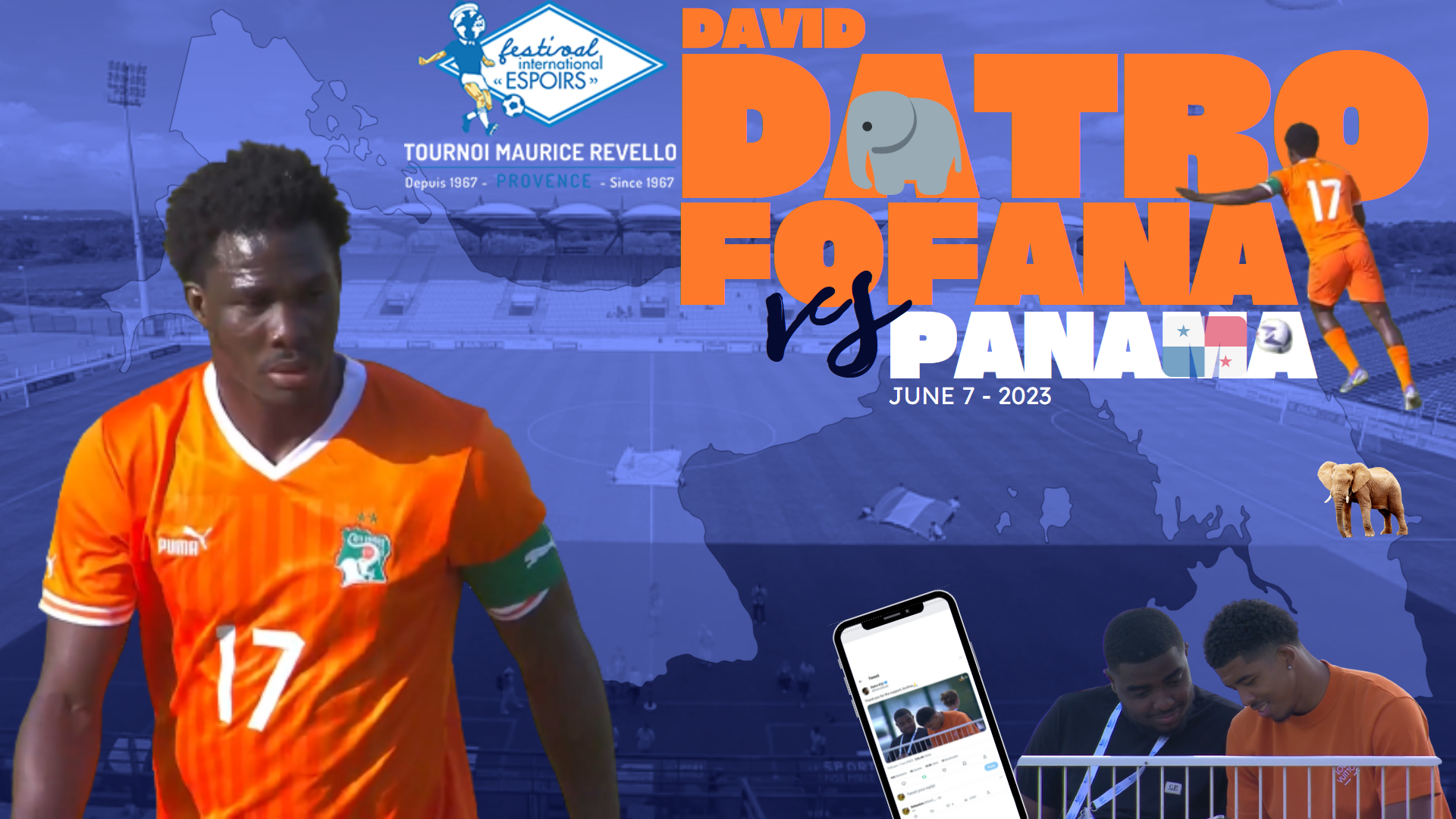
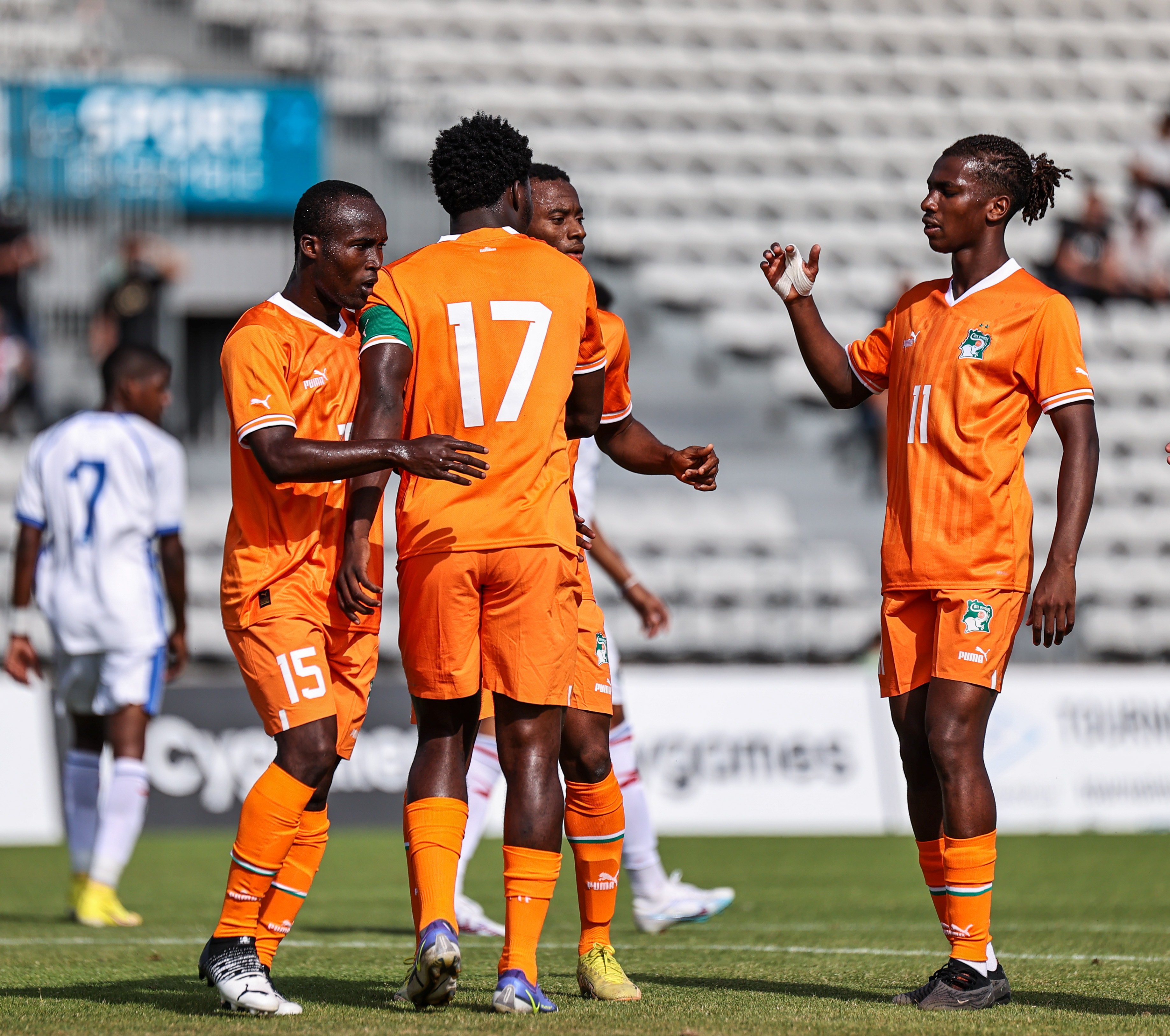
David Datro Fofana has been captaining his Ivory Coast team in the opening game of the Tournoi de Toulon 2023 against Panama.
He scored his team’s goal on penalty, but the isthmians didn’t dodge the opportunity to score an added time equaliser.
Ivory Coast won on pens (that gives them an extra point)
This is an enhanced version of the content I posted during the game, in a more comprehensive format, with several additions.
The general theme is akin to the NO NEED to get MADueke post; a quick thematic retrospective in the tune of a video feedback session.
What, why and how: underlying good things and the room to grow
There’ll be four angles:
Involvement in open play
Separation on crosses
Finising
Movement off the ball
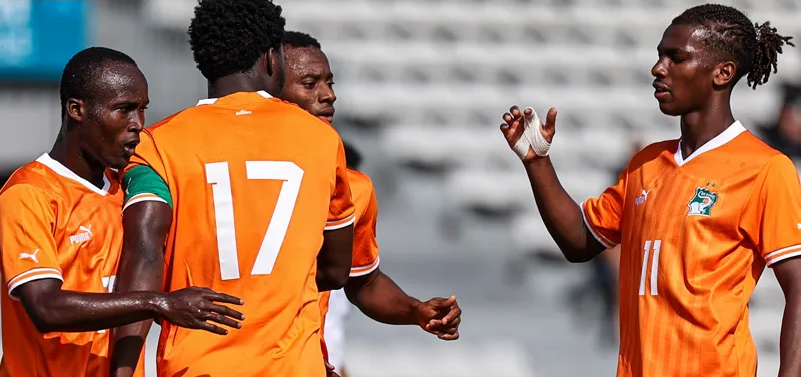
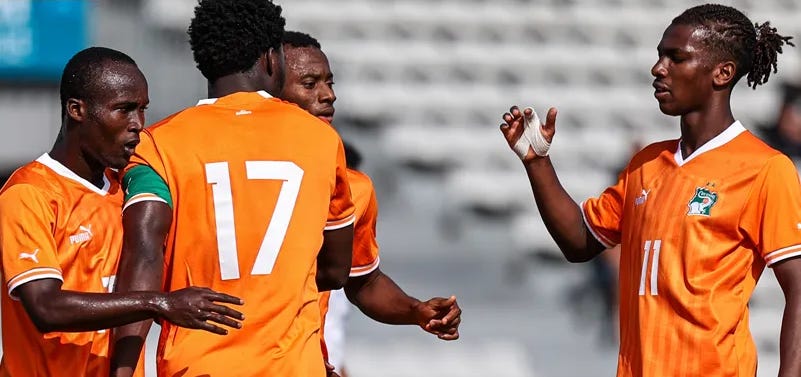
General note: David Datro Fofana (DDF, with the 17 Jersey) has an interesting mix of skills.
Not every U23 striker is “interesting” though, but this is where DDF is:
Usually, young strikers focus on scoring goals (and not offering a lot besides it), or play in supporting positions (but don’t find the route to goal too often).
The idea of their player development program is therefore usually to focus on strengths (rather than improving weaknesses), that’s usually the way football works (at least, what “happens”).
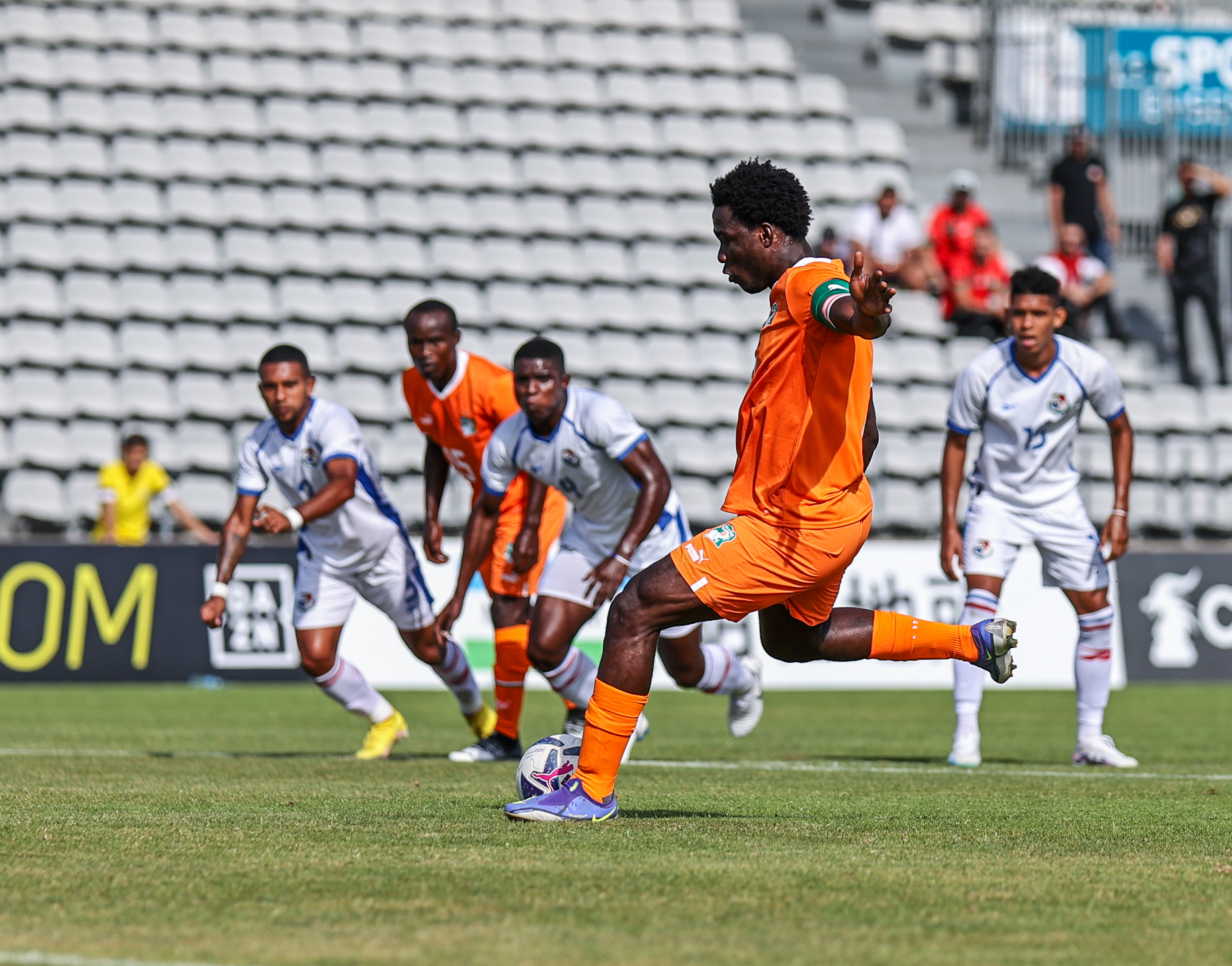
DDF is at least good enough at most things you’d expect a support / forward / winger, which is good and makes him a valuable “all rounder”
He’s got significant room for improvement at most things which is both unusual and promising.
So the tune is to highlight what’s good and why, what can be improved and how.

Involvement in open play
Reception between the lines
Several things are interesting here:
Reading the play to find separation between players, but moreoever stopping to not end up in front of the midfield line.
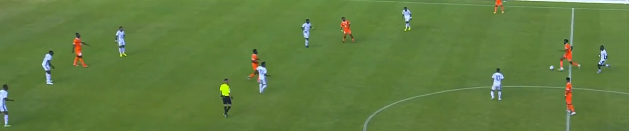
Quick shoulder check
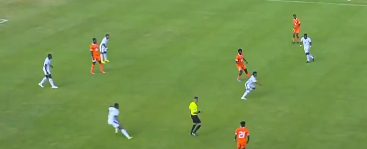
The backward steps are really good to maintain “technical distance” of reach.

As far as the reception is involved: DDF would benefit from receiving a stronger pass.

Reception is a bit “heavy” and flat footed (the right foot stays planted rather than adjusting), better stay dyanmic on toes so that the right foot can change location.
Once the left foot points to the direction of the pass, the hip rotation is more natural to pass it.
DDF makes up with a lot of strength from his other leg from a stanstill position.
Need quite a lot of quadri strength to hit a pass like that
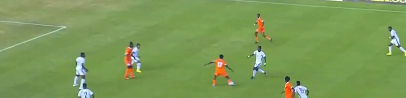
Combination and masked pass
This one displays an ability to think ahead.
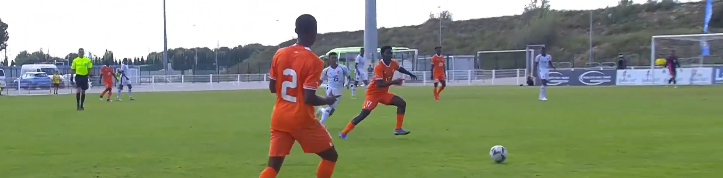
Normal footing would have seen DDF “suffer” from the ball reception and not dominate it.
The turn of pace before receiving shows he’s set his mind to bounce it on the turn
Doing it with the left leg is an choice afforded by the lack of direct pressure, and gains time because he’s not killing the ball
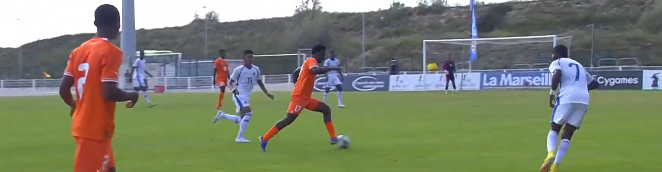
Pass is well hit, in the middle of the football with shoulders for balance nearly above it.
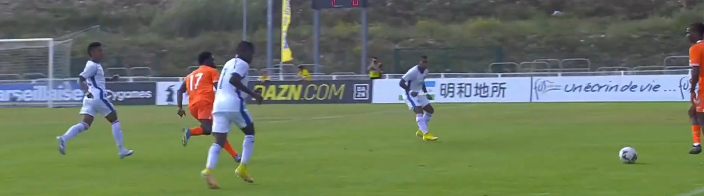
Change of direction is good, most average players will sprint to the corner flag and get in the way (if you want to overlap, just go in the team mate’s back… otherwise it’s a worse obstruction than keeping cardboard boxes in your loo).
The stuttering (left-left) before playing the masked pass is good, that’s good footwork to be able to use his right but setting his left foot right beside the ball.
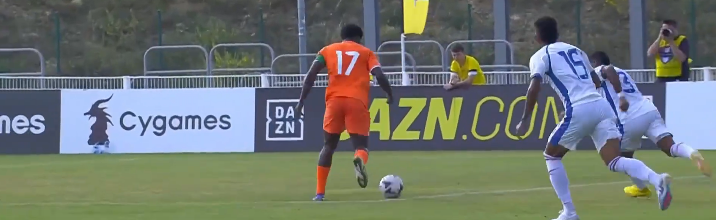

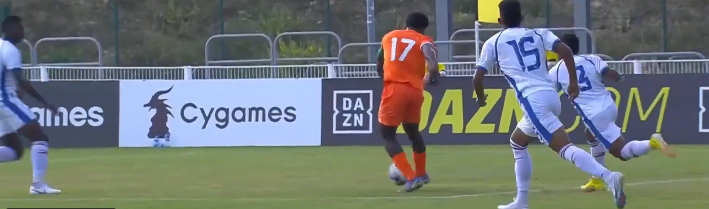
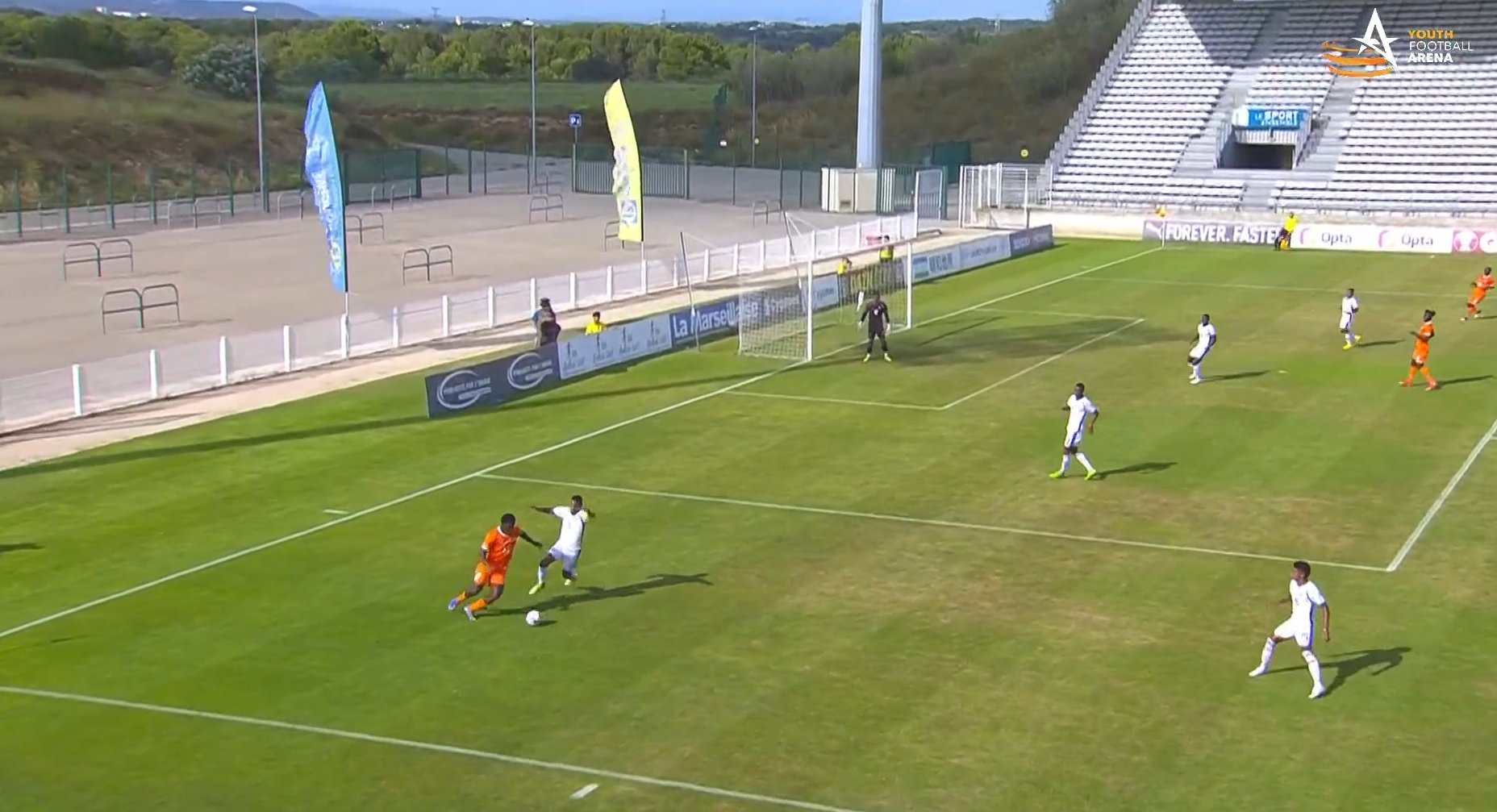
Running the channels
Any forward with significant senior experience will figure out (sometimes by himself after years of playing academy tippy tappy garbage nonsense) that goalposts don’t move and channels have to be ran.
Attacking spaces behind fullbacks is the way to shuffle a defence, usually to lay back to a fullback for a first time, far post cross.
Or draw a foul.
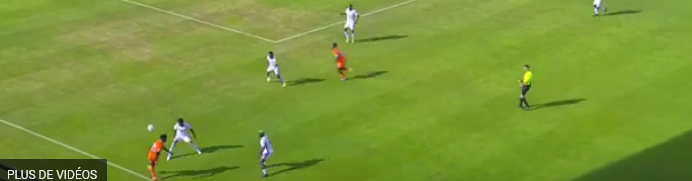
Timing, trajectory an pace of the “hook” run is good.
However, despite a bobbly first touch (↓) he manages to keep it under control

The use of arms isn’t optimal here ↓, defender is challenging his position whilst DDF’s hand is looking to make contact0
DF’s arm is bending, or hand not making contact, allowing the defender a shot at tackling the ball ↓
And bump into DDF that shouldn’t happen
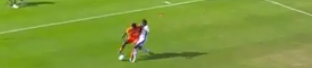
The dynamysm to end up there with a quick spin is good, strong beefy forwards aren’t always this dynamic.
From that point, DDF should either succeed at attacking the byline of draw a foul
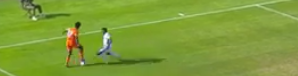
Again, the use of arms isn’t optimal ↓, defender has the upper hand.
Stretch the right arm more, and keep the shoulders near above the ball.
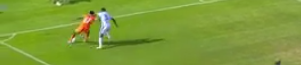
No palm on chest means that the defender can goet close and nick the ball
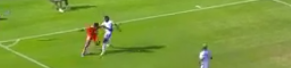
Which he does. It’s the kind of situaton where young forwards need to learn how to go on and off: shove the defenders (with arms at 45°, not arms full stretches that are too blatant of a foul) then get off with arms raised like “I didn’t do nothing”
then go again.
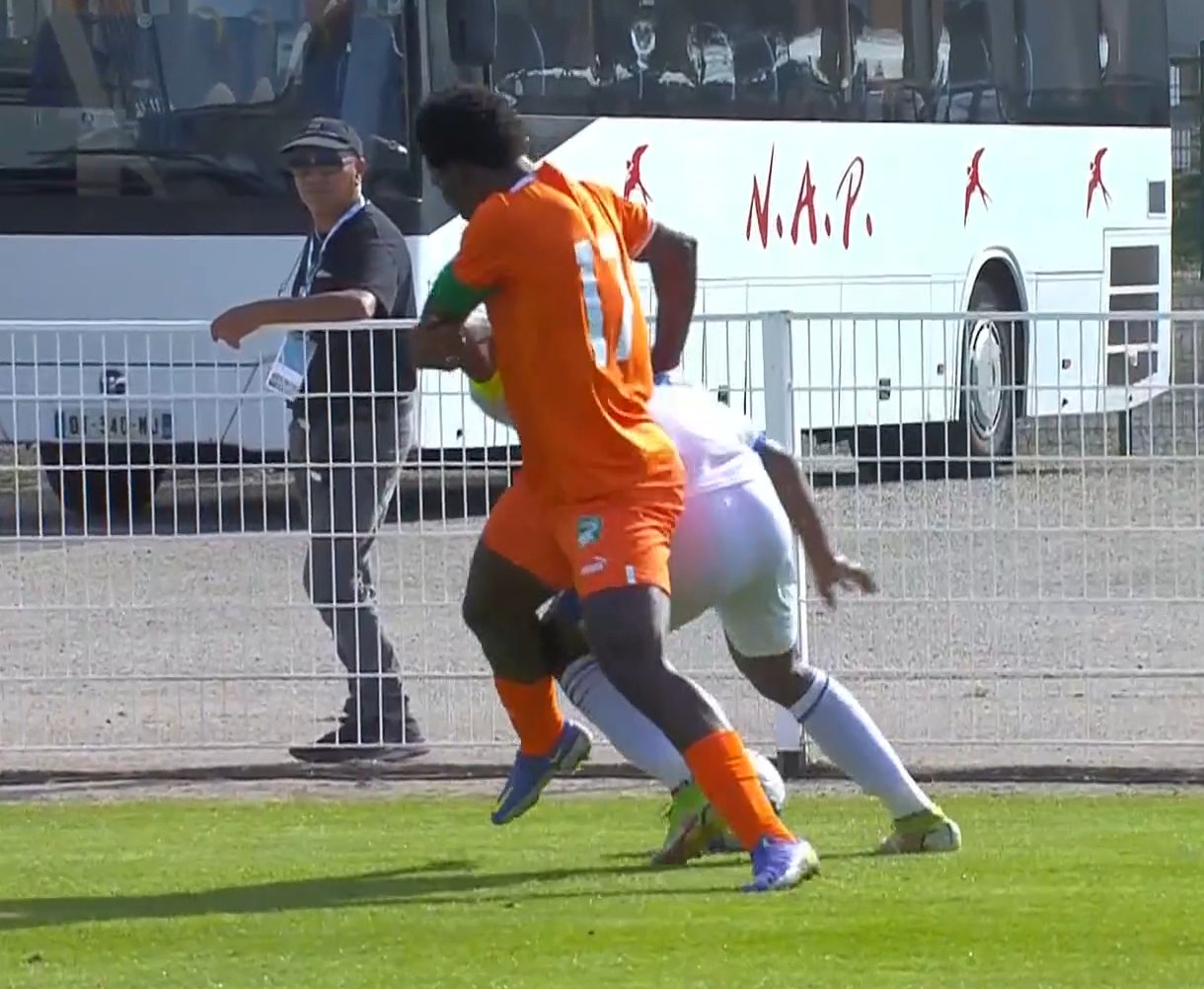
As long as the shove is continuous, this will be a foul once the defender falls over. Don’t bail the defender out with a cheap foul.
Usually, defenders who dwell on the ball will try by all means to pass it into play (whilst being themselves out of positions).
Risk averse one will have cleared it already down the line for a throw in.
Two footed
DDF’s carry is good (because the ball stays under control and he’s powerful enough to go after it)
Especially this drag with his left foot (where most one footed attackers would only use one foot)
The (second) spin and turn with the sole is decent, but is reminiscent of a different type of football – in younger age groups, where players do that at a similar pace (and often get caught on possession).
Especially when players put a little bit too much body weight on the ball.
A dynamic left footing allows to bring the left foot closer to the ball (therefore have the shoulders above the ball) and transfer the weight more evenly when jockeying (the dyanmic steps)
Here, the ball is a tad too far, hence the reliance on strength to use the ball as a step to pivot

That is time consuming to bring the left foot pretty much at the other side of the ball from where it’s at here:
Dragging the ball is an option, but from DDF’s position, can’t drag it back too far because he also needs to bring his left foot behind it.
Which allows defenders to get closer. And DDF can’t push him with his right arm

At this point, a right arm to keep defenders at bay would be convenient, and he now has put his left foot the other side of the ball but a bit flat (not on toes)
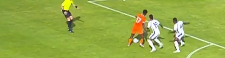
And there’s another instance of DDF compensating his standstill strong position (with his right foot too far from the ball), by a strong kick with the left leg

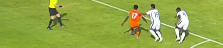
In other words: being really dynamic on toes allows to adjust more naturally to keep the weight and body above the ball.
Strong players can hit the ball hard even off balance (which DDF does here)
But the way the ball is struck produces these straight passes (because it’s hard to bend a pass with the pivot foot so far, there’s only so much distance and rotation the hip affords)
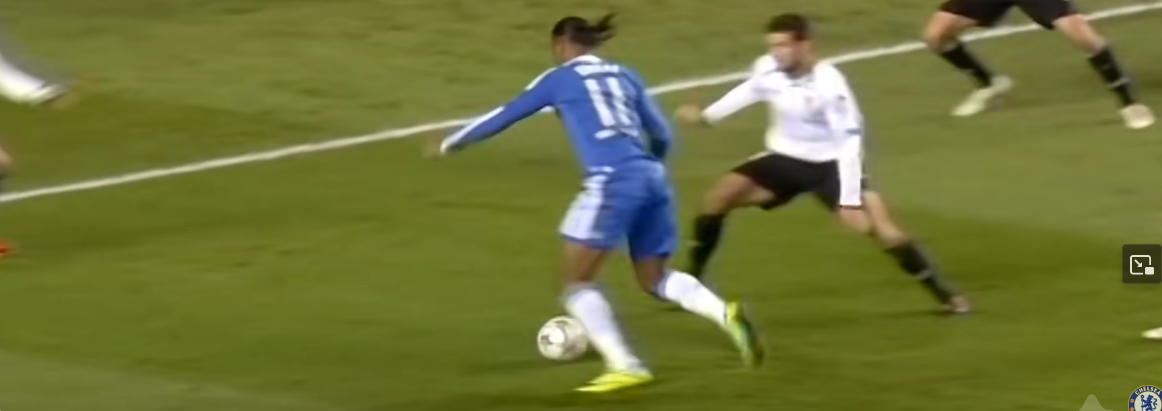
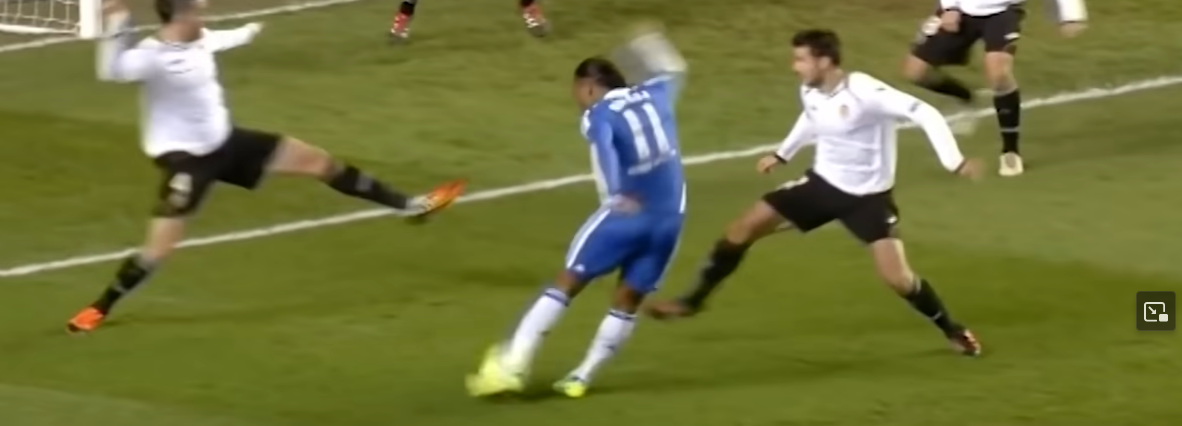
Example of Drogba’s goal #148 vs Valencia. That’s quick footwork, every step is nailed on, athletic and dynamic. Not just “one foot after the other”
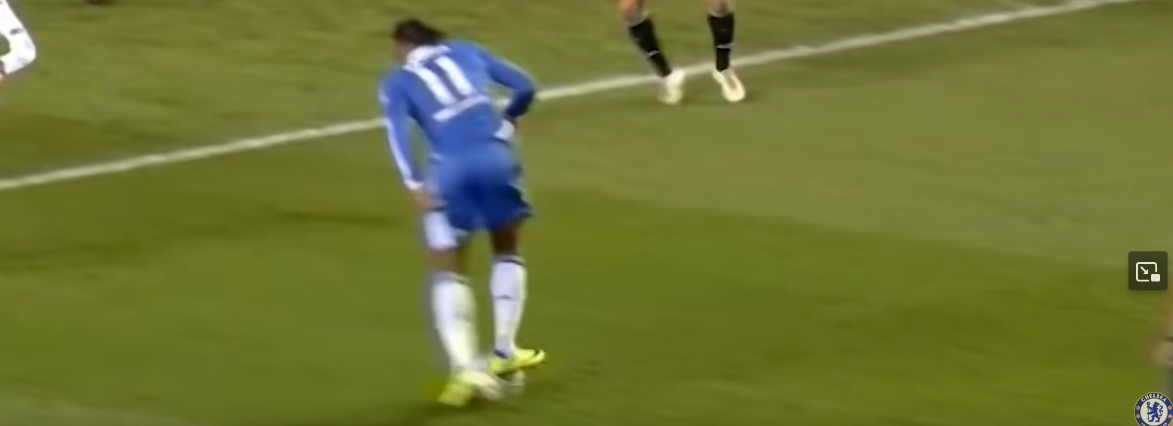
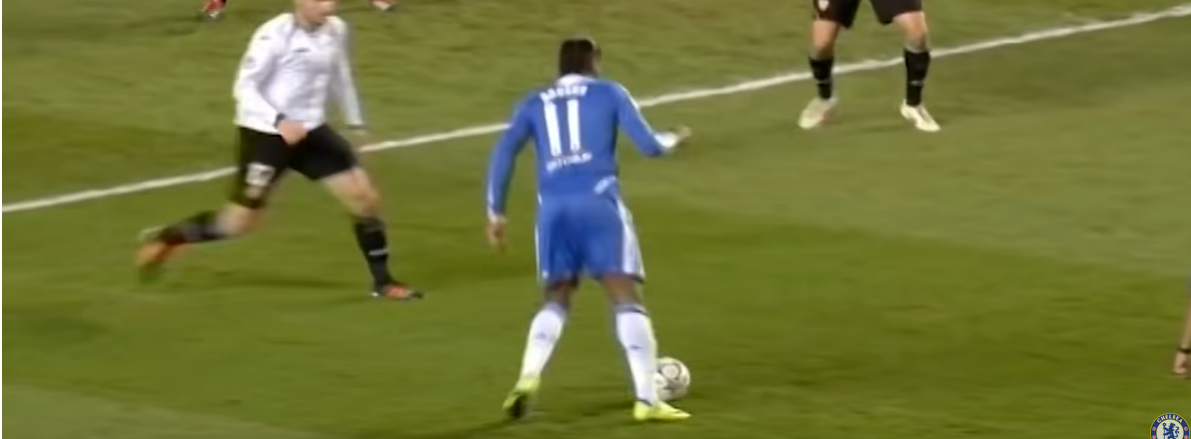

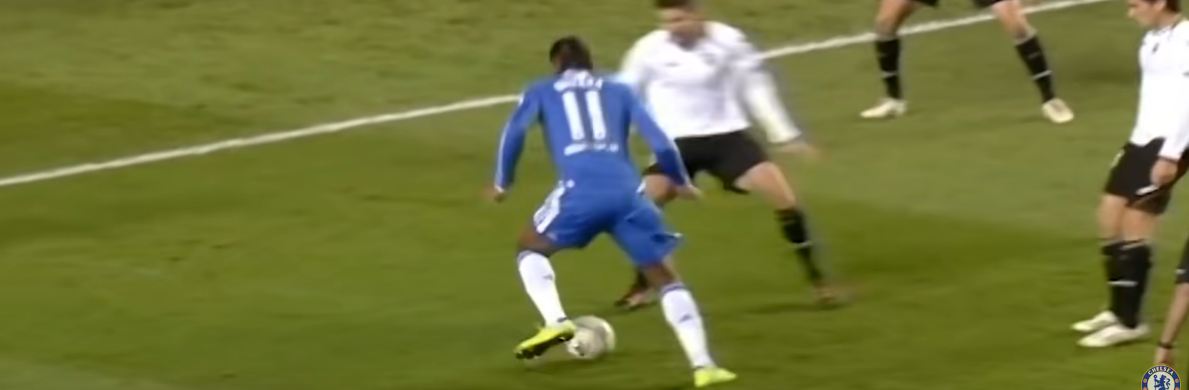
Left foot not flat; on toes! (allows to lift off quicker for the next one)

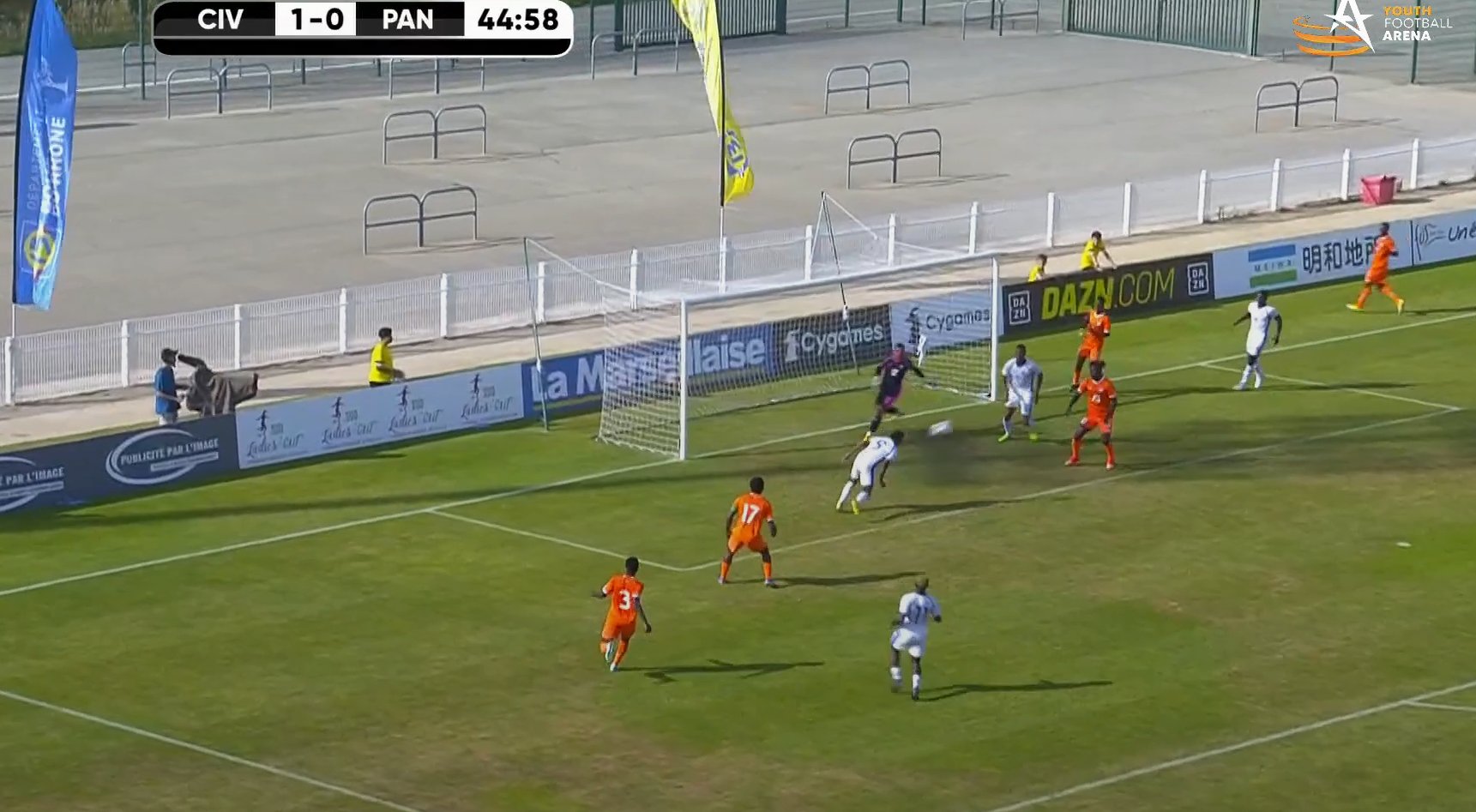
Separation on crosses
David Datro Fofana spent the game on the right in the first half, more on the left in second half. His positioning on crosses is the biggest area of improvement he can take out of his performance.
Put it differently, doing slightly better on a couple of situations might have made irrelevant Panama’s last minute goal, instead of turning it into a draw.
Get on the move when the cross is hit
The cheat code to connect with crosses is to start when the cross is hit, not during it.
Ideally, bend the run to go round the penalty spot opposite side to the crosser
And dart for the ball when it’s hit.
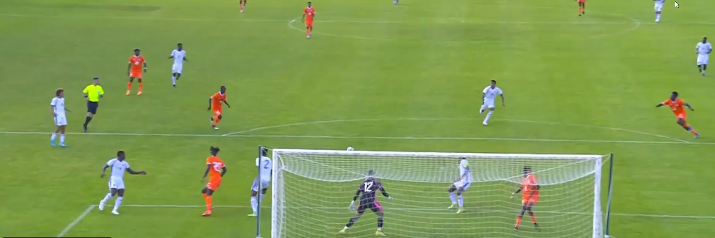
It looks like DDF waits the ball being already rolling before triggering his run.
There he should be just about to get in front the defender
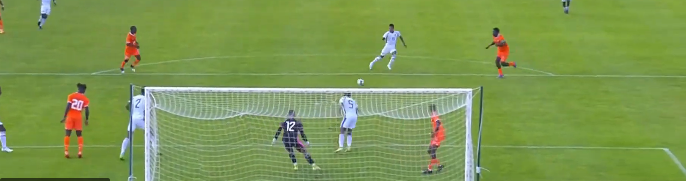
Cat and Mouse
The other cheat code, is to escape the defender’s field of vision. It’s a game of cat and mouse.
Attackers knows where he wants to go, defender is second guessing.
That gives the striker a head start.
If the defender can see both, separation can’t be done as most half decent defenders can spot the runner and the ball (act accordingly is another thing though)
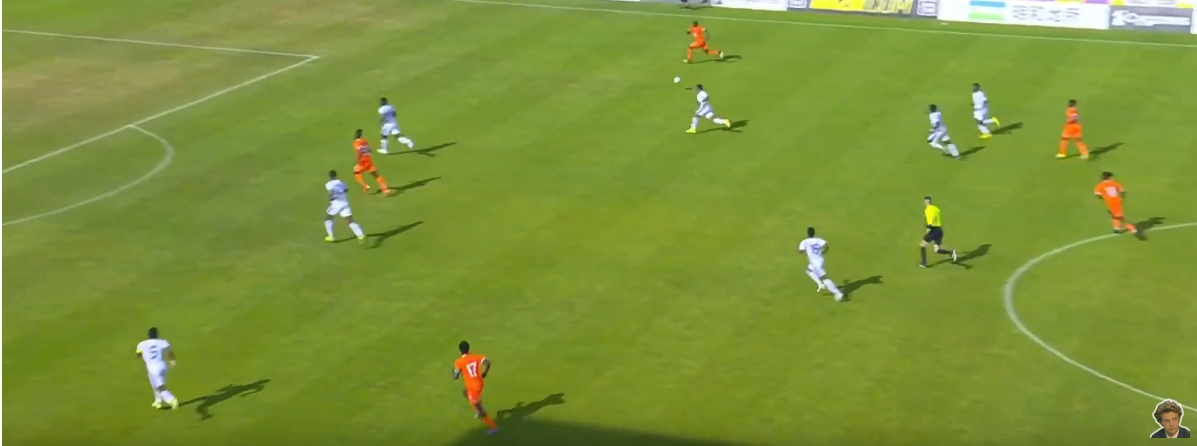
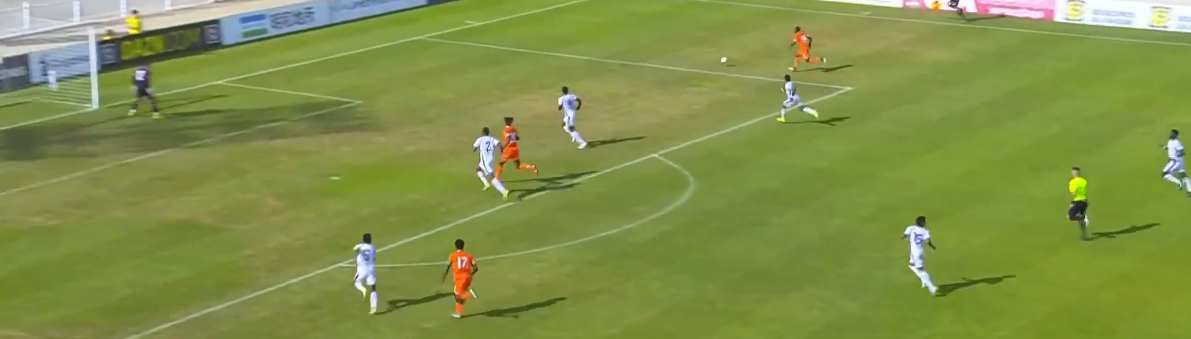
If the defenders sees / feels the striker, he’ll narrow down the interval at the back post
Staying in his blind spot doesn’t invite the defender to narrow, because 1: usually backpost fullbacks don’t and 2: they might wonder where the striker is.
Not everyone is Ashley Cole (or Branislav Ivanovic but he used to be a CB)
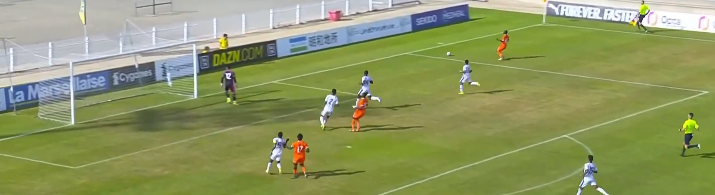
Never underestimate the other guy’s . . .
On this one DDF (after a big effort on the previous play – still) isn’t crashing at the back post (he’s just besides the box score)

Needing more time to recover between actions (tbh he’s hardly been able to build momentum this season) ?
Or guessing the any of the CBs, striker or GK will get there first?
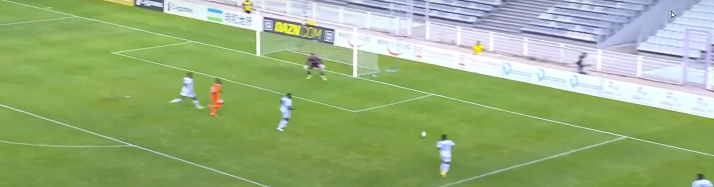
Never underestimate the other guy’s . . . inability to defend crosses in the mixer.
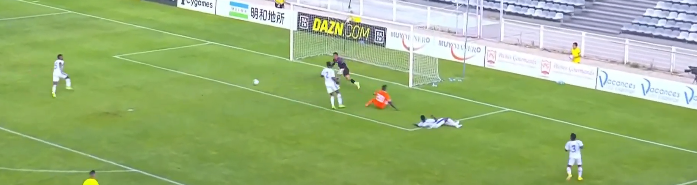
68’, that was a tap in at the back post for the 2-0, with a (tax) haven of space given the right back was nowhere to be seen either.
Back post crashing
On this instance, DDF is also witnessing first hand the cross at the far post being cleared at um… knee level with a, erm… diving header.
It’s not a stretch to imagine getting ahead with the right timing, let alone locking on the defender to force a mistake (and force the referee into a decision to award a free kick for the fullback)
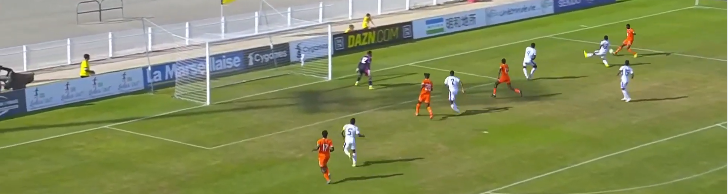
The ability to refocus is more important than the abiity to play good actions, so that players can maximise opportunities especially for second chances or shots scrambling between legs (by staying onside).

A trip down memory lane: Ballack plays through Malouda, Drogba is on the far right of the attack. Goal #88 at Liverpool
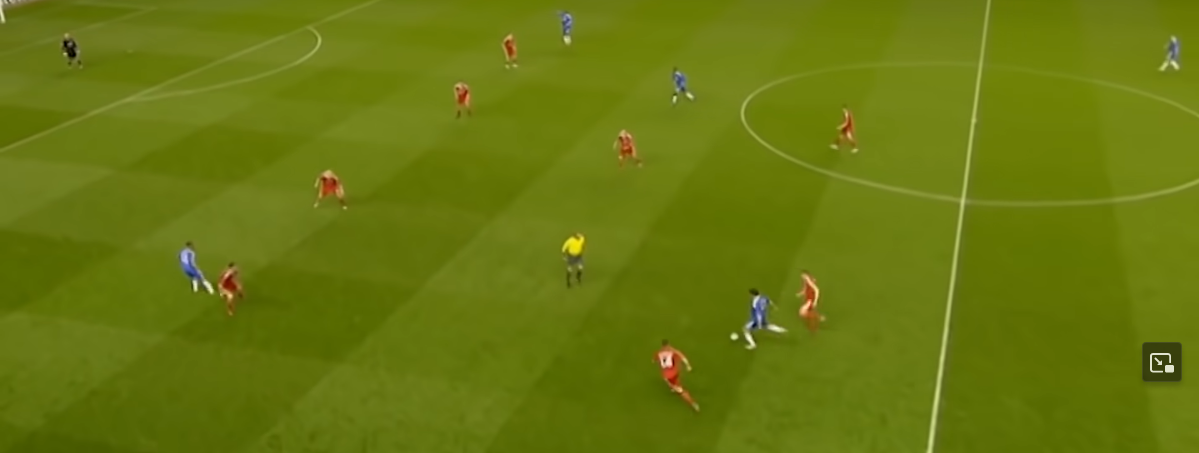
Gets on the move before Malouda can get to the pass

Is about to bypass the defender when the ball is about to be hit
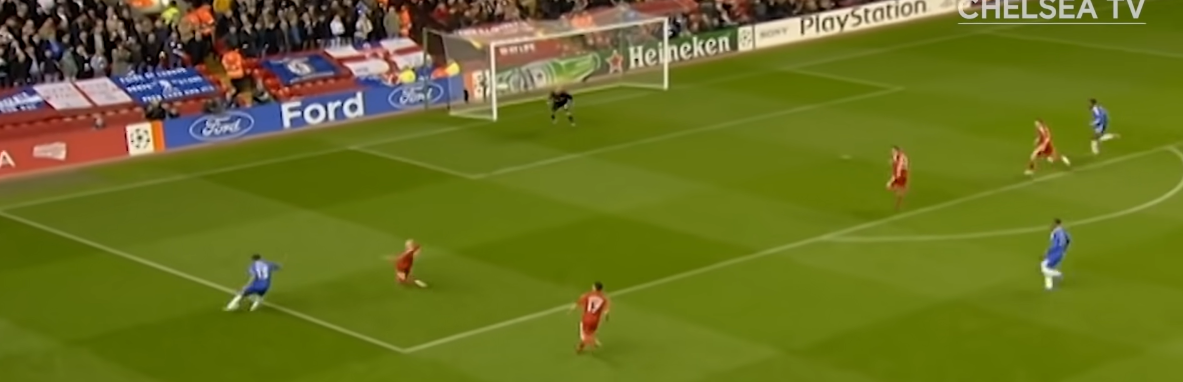
So that he darts in front just when the ball reaches him
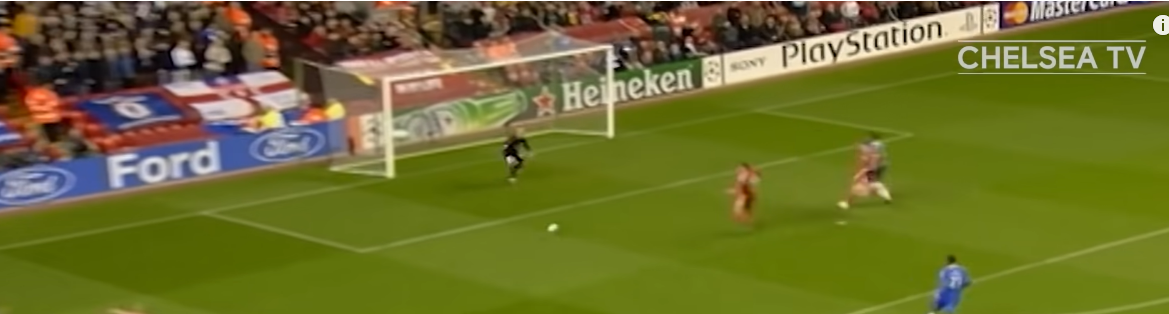
Rest is history, 1-3 Chelsea

Another example (goal #110 vs APOEL Nicosia):

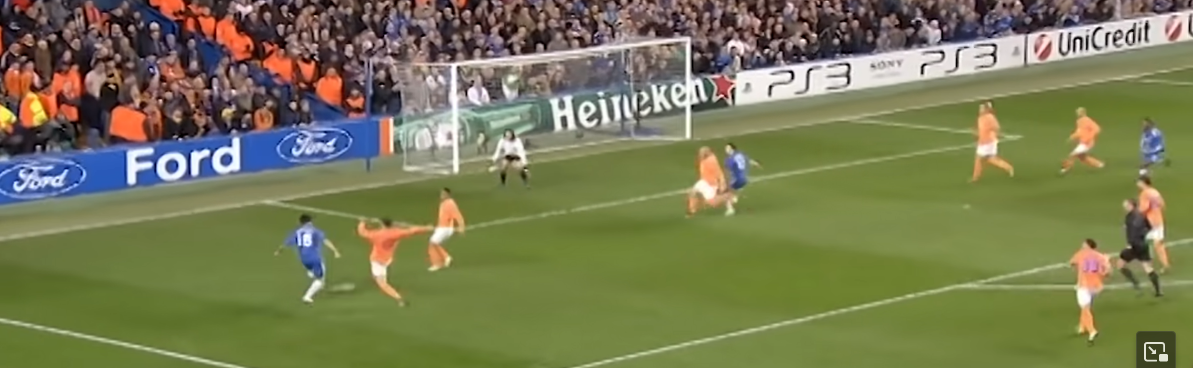
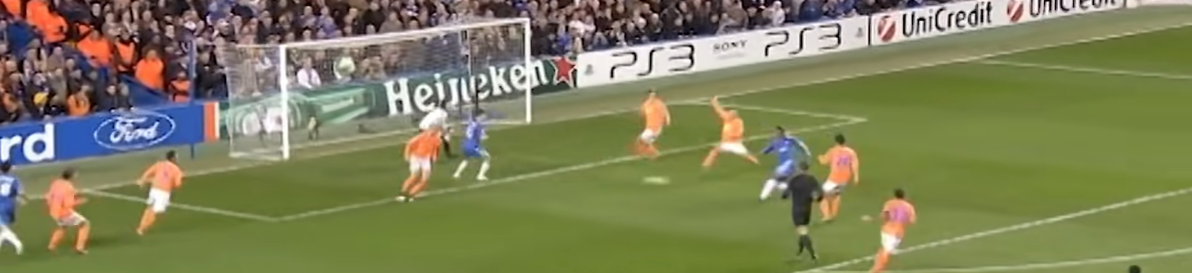
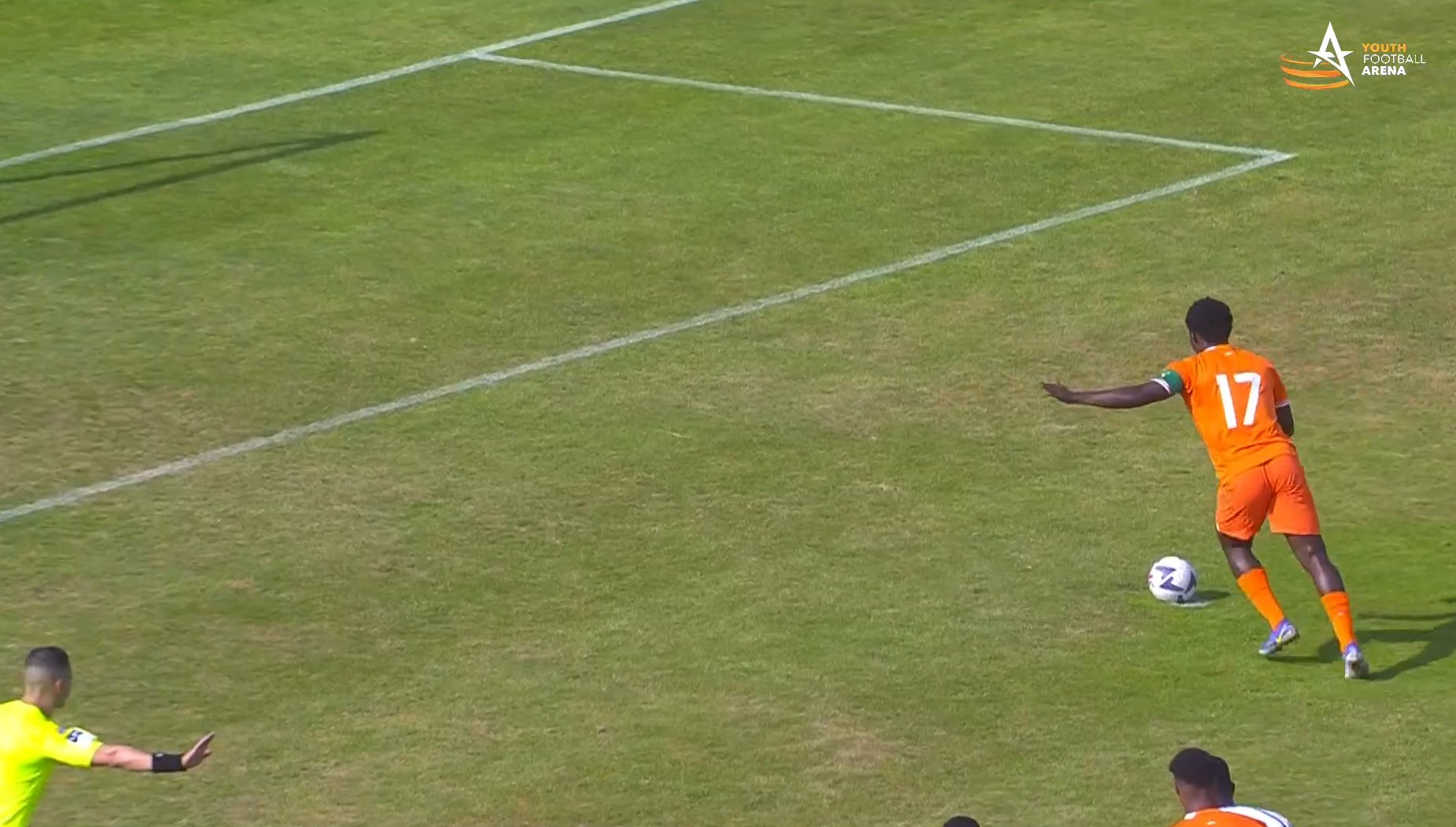
Yes, by the way DDF scored a penalty.
Finishing
Far post finishing
DDF has a positive first touch, diagonally which is good.
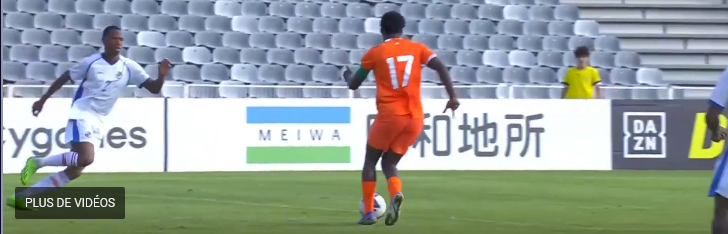
However his second touch is only good-ish (too long to make a second one)
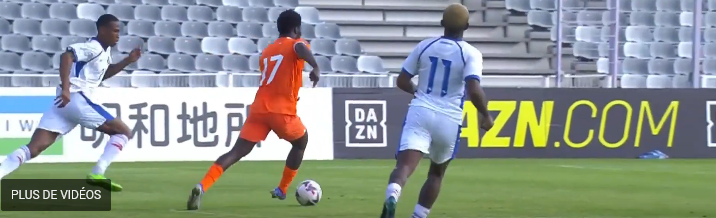
or too short to set his pivot leg (way) in front of the ball.
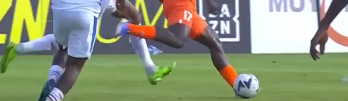
Ideally, that second touch is a close “drag” and not a “knock”
So that the third touch really sets him how he wants (whilst he adjust his footing to nail the left foot location)
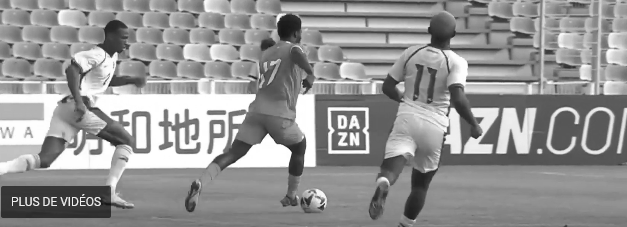
DDF goes after his second touch, but the location of his left foot forces him to bend the left leg to try to go through the ball with the laces.
Ideally, the pivot foot is level with the ball here, so the foot really goes through.
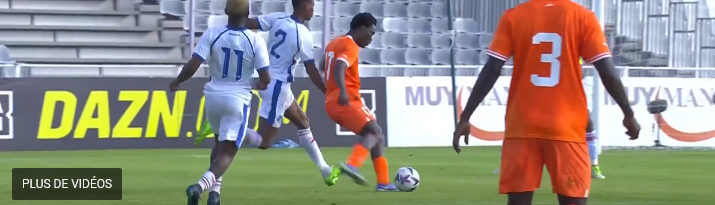
Here, the ball is hit a bit too early.
In a different sport (golf), there’s some (light) parallels to draw whether you hit the ball too early (and dig a hole), or late (and top the ball). End of parallels, because the body has a lot more articulations than an iron club.
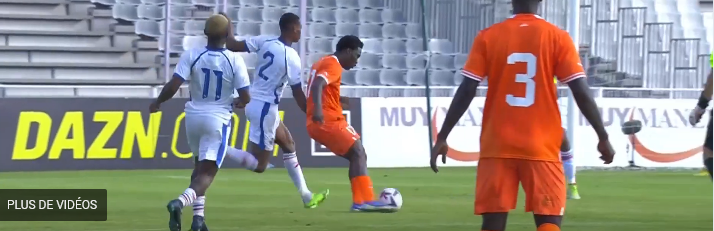
However, this is where DDF shows some real promise for the future:
the intent to curl the ball at the far post is really interesting, the follow-up (launch the toes of the foot which shoots toward the intended direction of the shoot) allows to produce the desired shot.
Shoulders leaning forward allows to put power on the shot without it flying over.
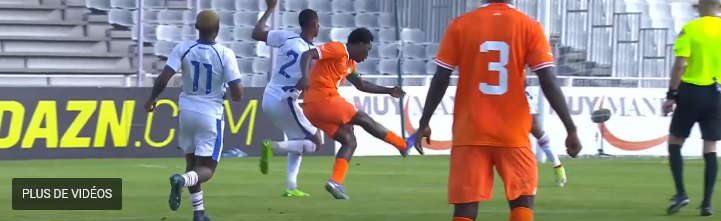
With the bounce before goalkeepers that they hate.
And is a killer on watered pitches.
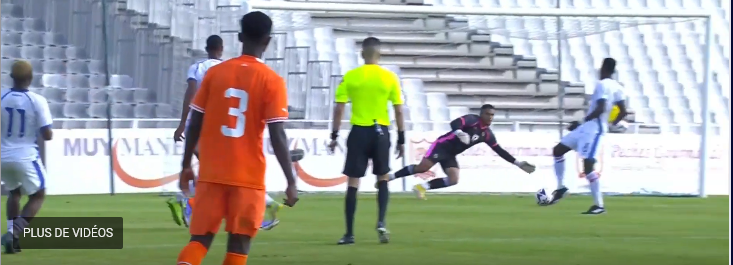
Here’s to expect: a more consistent ability to set his foot at the right place (like Agüero nailed on every single time), and even more power.
That’s not nothing, he clearly aims for a zone with intent.
Then shoot with intent to hurt the goalkeeper (or pass to the net), not just aim for a location in the goal.
That’s more than Timo Werner did on most chances he was presented with.
Failure to dominate the ball, set his left foot correctly and like, hit the football.
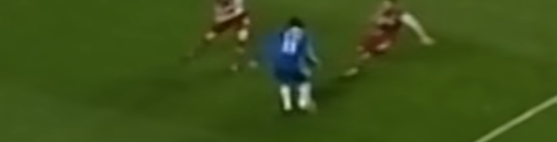
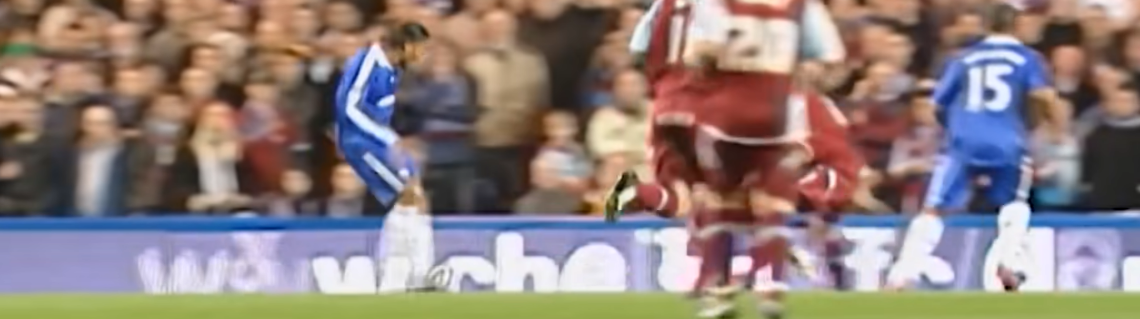
Example with Didier’s goal #81 against Burnley,
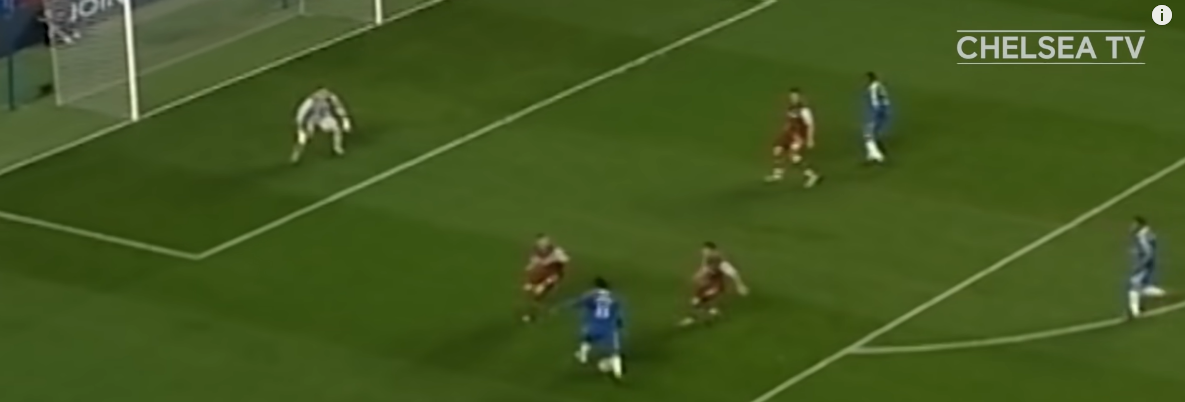
and a left foot level with the ball
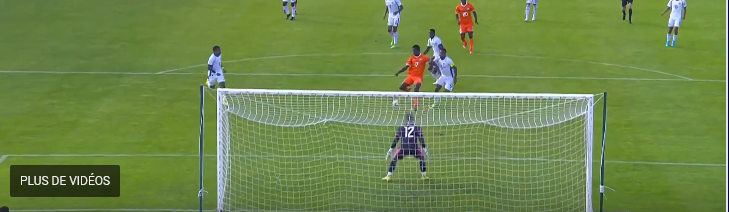
Half volley chance
DDF had a glorious chance to score a brace, that he gets resulting of being on the move during the fick on (which only pure 9 have a feel for).
The finishing isn’t great, because DDF doesn’t make the right decision in time:
Either you hit the ball when it drops before the rebound. Instep, why not, but locking the ankle to not have the toes going all over the place is harder than going through with the laces
Also, laces allow better accuracy with the follow up (with the toes – on both feet – pointing in the intended direction)
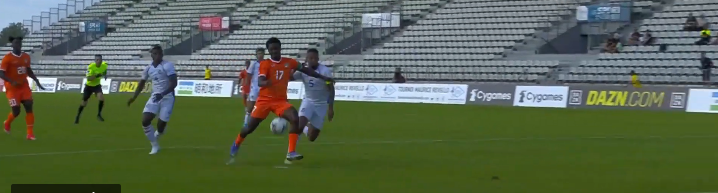
Or right when it drops, as “half volley” for a low shot.
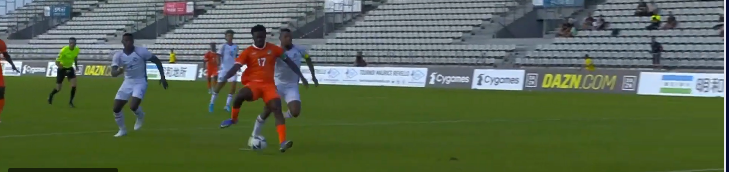
By hitting it when the ball is on its way back up (which is the wrong timing)
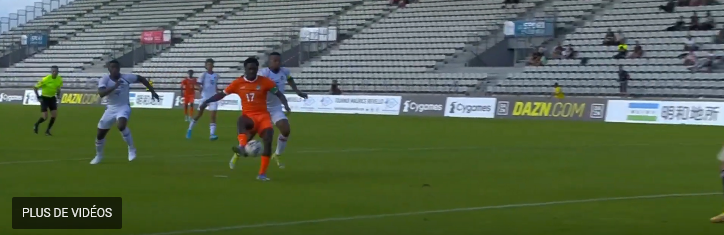
He’s sort of forced to hold back some power, and the fact that he’s sligtly leaning backwards makes it almost a surprise he managed to still put it on target
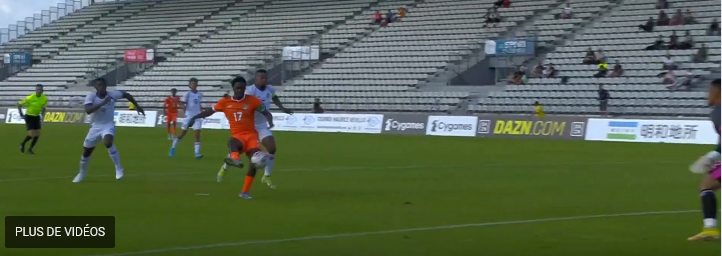
Both technical choices (volley or half volley) are supposedly based on what the environment affords = does the goalkeeper goes low or stays on his feet.
It is right that DDF hasn’t a glance at the goalkeeper to pick the opposite to what he’s doing.
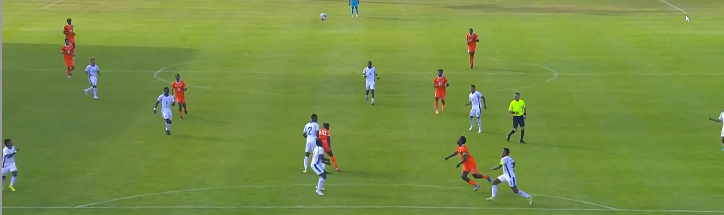
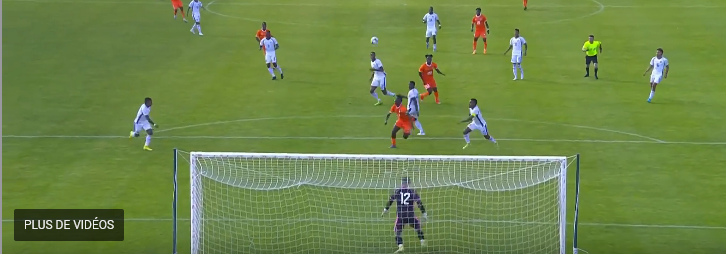
Focusing only on the ball is fine, Agüero didn’t look much at goalkeepers or where he was about to hit.
Also because his trademark near post / roof finish was succesful every single time, due to the speed to trigger the shoot, the drive it had, the swerve and the absolute power to go through it. There’s a video on twitter

Here’s a benchmark that Datro necessarily watched a thousand times already
See when Didier hits the ball: on its way down
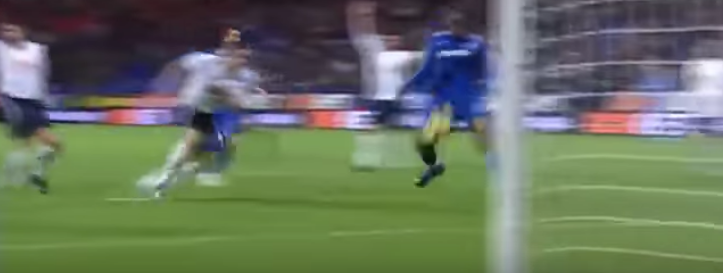
See also: the dynamic footwork mentioned previously, to make sure the left leg ends up level to the ball’s drop point:
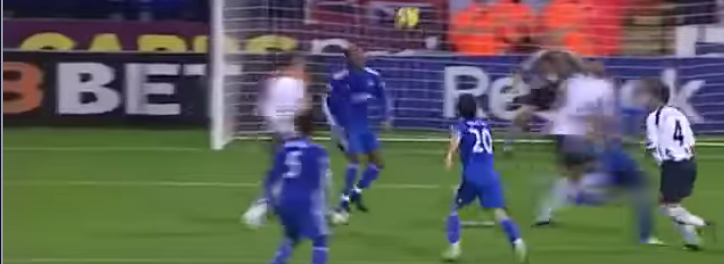
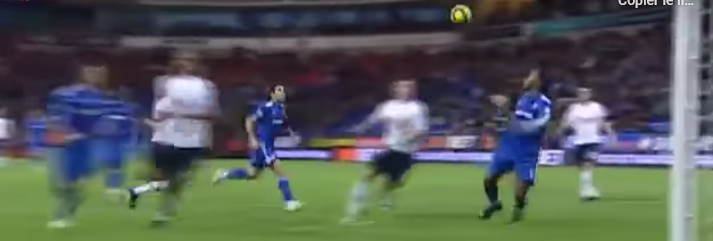
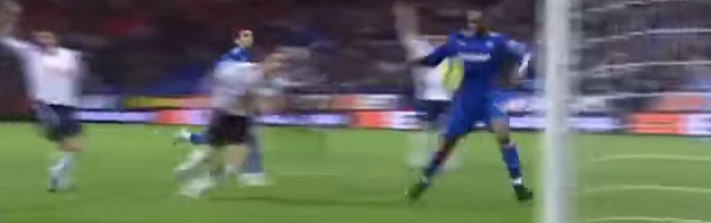
Left foot pointing towards goal (which we can’t see)


This one on the half volley against Strawberry Town Shrewsbury. Goal “#160
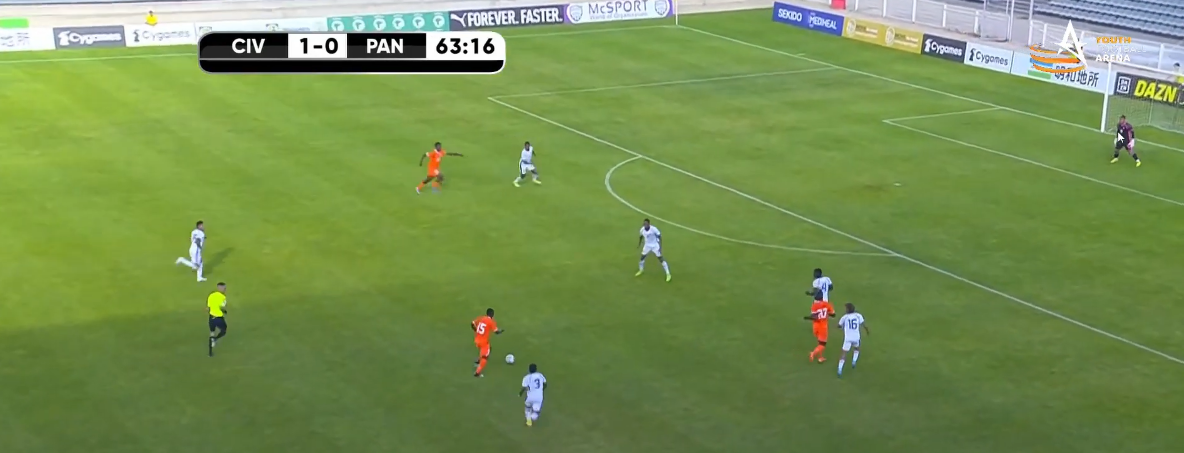
Movement off the ball
On top of everything DDF shows promise for on the ball, is his energy expense to make a number of runs to stretch defences and tire defenders.
He really seems to be on the way to become a high level player, able to repeat intensity actions.
This play, specifically, won’t show up anywhere in a data stats (running stats maybe).
Strikers construct their games over 90’ by making defenders running towards their goal (which they hate), this also creates space between the lines for flick on and second balls.
Mistakes are often a more or less direct consequence of having to track these runs off the ball for the entire game until you can’t take no more and fluff a clearance or a headed backpass.
This one is high level:
Defender’s blind spot forces him to check his shoulder in the other direction
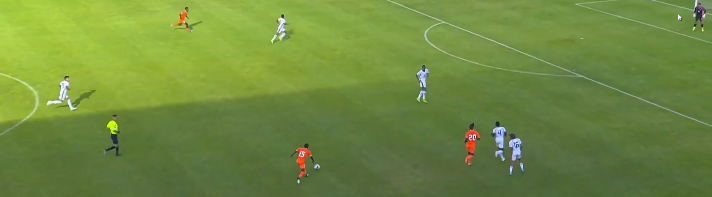
Defender looks at the ball, DDF has already moved trajectory
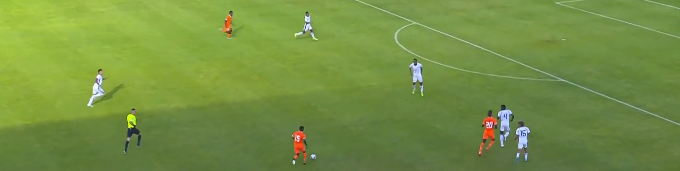
Obvious arm to bait, which drags his fullback but could also split the RCB with an interesting body angle and foorwork
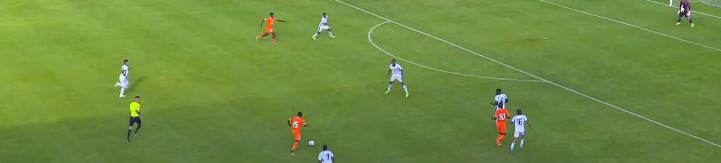
RB is commited, Panama’s defence’s “pyramid” (nearest commits, cover players narrow behind – alright).

DDF stops in defender’s blind spot, to not be offside (but unchecked)
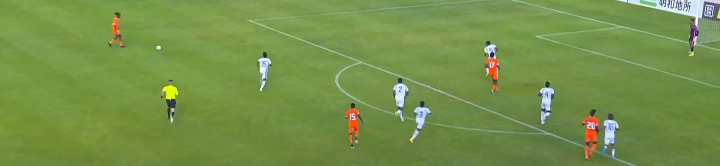
Until that point, fine but he won’t get an extra 5 goals per season
Don’t lock on the defender waiting to see what happens, find separation once again (step back, get on the move)
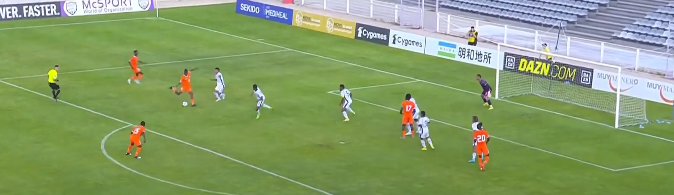
Or outright sprint at the goalkeeper. That’s +5 goals a season guaranteed.
“unlucky with expected goals”
“do your strikers have the first clue?”
“nah they’re attacking midfielders because I want ball retention”
“look no further”
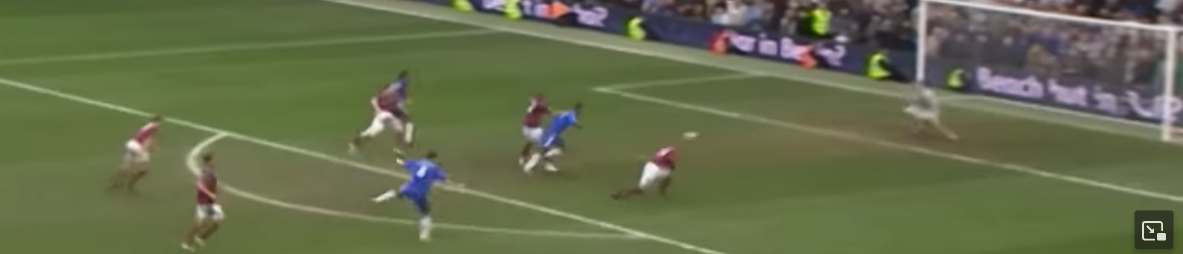
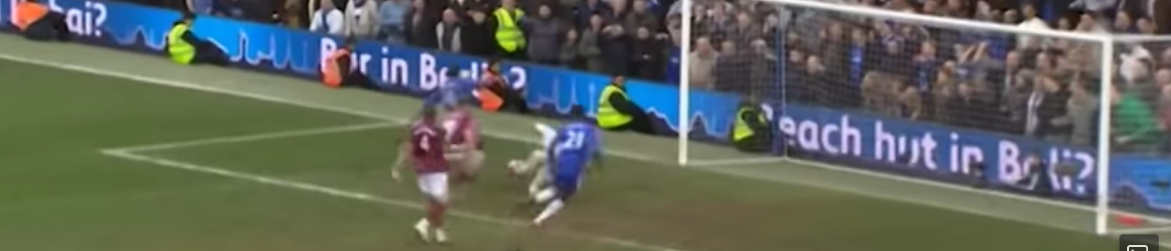
Didier’s goal #121 against West Ham. Lampard shoots, but Drogba sprints to the goalkeeper. Guess who gets to the ball first?
29 goals, including 1 penalty Didier (2009/10)



 Sébastien Chapuis